Emergency / 911
Hurricane Safety And Preparedness
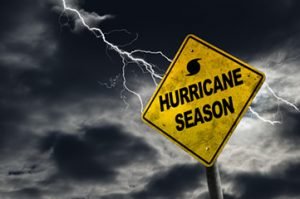
Hurricanes are huge tropical storms that move in a counterclockwise spiral. They form in the eastern Pacific Ocean, the Caribbean Sea, the Gulf of Mexico, or the southern Atlantic Ocean. The storm’s calm center, called an eye, is about 20 to 30 miles wide. The storm around the eye can extend outward 400 miles with winds in excess of 74 mph. It’s important to know what to do before, during, and after a hurricane.
Before…
Have a hurricane disaster plan: Locate local shelters. Map the route to a nearby shelter; this will cut down on the travel time. Make sure you know how to get there before an evacuation order is issued.
If you are not ordered to evacuate, find shelter in your home. The safest place during a hurricane is an interior room without windows. Get your home and yard ready for a hurricane. Install hurricane shutters; remove dead and diseased trees and branches; identify items in the yard that should be brought inside; clean rain gutters, outside stairwells, window wells, drain lines, and downspouts.
- Family members can become separated during a hurricane. Be prepared by creating a plan for how to reach one another. Establish an out-of-area contact (such as a relative or family friend) who can coordinate family members’ locations and information should you become separated. Make sure children learn the phone numbers and addresses, and know the emergency plans.
- Prepare a family disaster supplies kit. Families with children should have each child create their own personal pack.
During…
If a hurricane watch has been issued for your area, conditions are favorable for and could produce a hurricane. Listen to the news and the weather updates and make sure you leave if an official evacuation is ordered. Cover your windows with hurricane shutters or plywood. Taping windows offer little or no protection against the winds. If a hurricane warning has been issued, a violent storm, possibly a hurricane, is expected within 24 hours.
- Remain inside, away from windows and doors.
- During power outages try to avoid carrying a lit candle. Use flashlights instead. Don’t use a lit candle when searching for items in a confined space. Never use a candle for a light when checking pilot lights or fueling equipment such as a kerosene heater or lantern. The flame may ignite the fumes. Read NFPA’s candle safety fact sheet.
- Do not be fooled by the calm when the eye of the hurricane is above your area; the worst of the storm is probably yet to come.
- Be prepared for tornadoes caused by hurricanes; remain inside and at the center of your home or in a closet or basement.
If you are evacuated, take your family disaster supplies kit and leave immediately to a nearby shelter.
After…
Continue to listen to the news and weather updates. Often when the storm is over, damage still exists from floods, downed power lines, and electrically charged water.
Stay out of buildings that have been damaged or flooded and obey detour and warning signs when driving. Never enter a flooded or barricaded roadway (even with a large vehicle) vehicles can be swept away by only two feet of water.
Source: NDEC (National Disaster Education Coalition), NWS
Preparing for natural disasters
In a disaster, local officials and relief workers cannot reach everyone immediately. Help may not arrive for hours or days. You need to be prepared ahead of time because you won’t have time to shop or search for the supplies you will need when a disaster strikes.
Most disasters are natural disasters, the result of some force of nature, such as tornadoes, hurricanes, and floods. Some natural disasters can be predicted, such as hurricanes and severe winter storms, while others, such as tornadoes and earthquakes, happen with little or no warning. Some disasters are the cause of human actions, intentional or unintentional. A disaster plan will help with safety, security, and comfort. Regardless of the type of disaster, there are things you can do to prepare. Contact your local Red Cross chapter or visit the FEMA Web site to make sure you are aware of the potential for natural disasters in your community. After you have identified the types of disasters that could strike where you live, create a family disaster plan. Remember to make it simple so everyone can remember the details.
General preparedness
- Discuss what to do in an evacuation, and don’t forget to include the needs of those with disabilities.
- When told by officials, go immediately to a shelter as instructed or to the home of a friend or relative who lives out of the area. Find out about your local shelters beforehand.
- Know evacuation routes. Pre-establish several different routes in case certain roads are blocked or closed.
- Family members can become separated during an emergency. Be prepared by creating a plan for how to reach one another. Establish an out-of-area contact (such as a relative or friend) who can coordinate family members’ locations and information should you become separated. Make sure children learn the phone numbers and addresses, and know the emergency plans.
- Quiz children every six months so they remember what to do, where to go, and whom to call in an emergency.
- Decide how to take care of pets. Pets are not allowed in places where food is served, so you will need to have a place to take your pets if you have to go to a shelter.
- Post emergency phone numbers (fire, police, ambulance, etc.) by the phone.
- Download NFPA’s free safety tip sheets on a variety of emergency preparedness topics: hurricane safety, flood safety, portable generators, emergency supplies kit, candle safety.
Scroll to Top