Emergency / 911
Heat Exposure
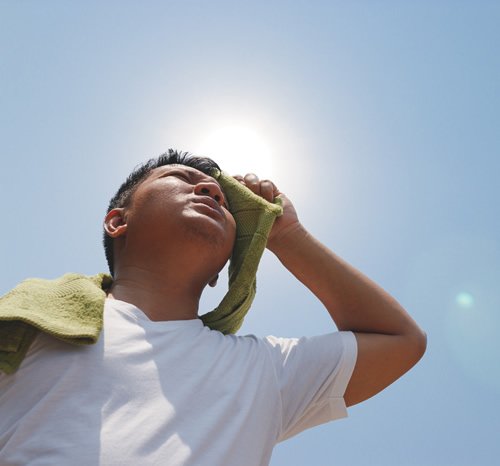
Heat exposure is one of three heat-related syndromes, with heat cramps being the mildest and heatstroke being the most severe. Without prompt treatment, heat exhaustion can lead to heatstroke, a life-threatening condition. Fortunately, heat exhaustion is preventable.
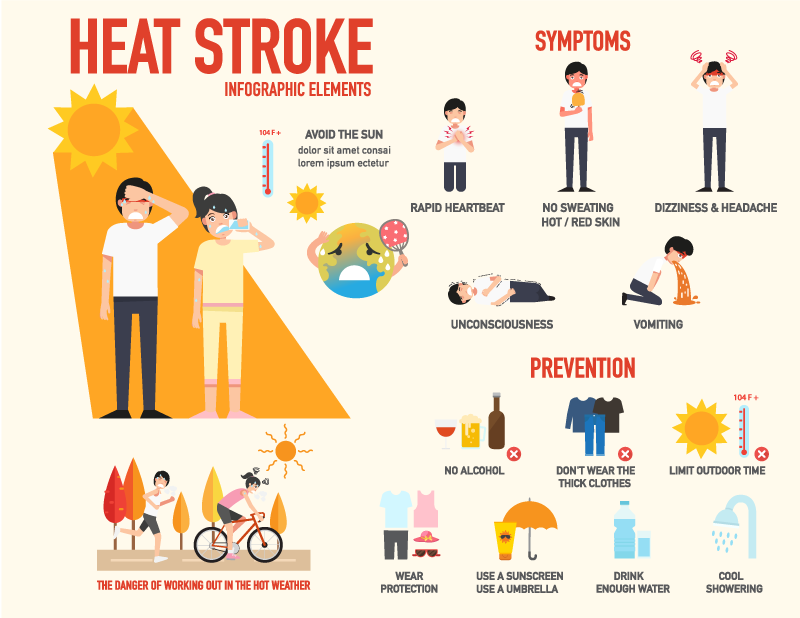
When you are exposed to extreme heat by working or playing in hot environments you can be at risk for heat stress which can result in illness or injury. Those who are 65 or older, are overweight, have high blood pressure or have heart disease are at a greater risk for complications from heat stress. Medications can also increase sensitivity to high temperatures.
You can reduce the risk of heat-related illness by doing the following:
- Stay Cool
- Stay Hydrated
- Stay informed
National Environment Public Health Tracking Network
Learn more about reducing the risks at https://www.cdc.gov/heat-health/about/index.html
The three primary heat-related illnesses are:
- Heat cramps
- Heat exhaustion
- Heatstroke
Heat Cramps
Heat cramps usually affect workers who sweat a lot during strenuous activity. This sweating depletes the body’s salt and moisture levels. Low salt levels in muscles cause painful cramps. Heat cramps may also be a symptom of heat exhaustion.
Symptoms include muscle cramps, pain, or spasms in the abdomen, arms, or legs

First Aid:
Workers with heat cramps should:
- Drink water and have a snack and/or carbohydrate-electrolyte replacement liquid (e.g., sports drinks) every 15 to 20 minutes.
- Avoid salt tablets.
- Get medical help if the worker has heart problems, is on a low sodium diet, or if cramps do not subside within 1 hour.
Heat Exhaustion
Heat exhaustion is the body’s response to an excessive loss of the water and salt, usually through excessive sweating. Workers most prone to heat exhaustion are those that are elderly, have high blood pressure, and those working in a hot environment.
Symptoms of heat exhaustion include:
- Headache
- Nausea
- Dizziness
- Weakness
- Irritability
- Thirst
- Heavy sweating
- Elevated body temperature
- Decreased urine output
First Aid:
Treat someone suffering from heat exhaustion with the following:
- Take them to a clinic or emergency room for medical evaluation and treatment.
- If medical care is unavailable, call 911.
- Someone should stay until help arrives.
- Remove the individual from the hot area and give cool liquids to drink.
- Remove unnecessary clothing, including shoes and socks.
- Cool the worker with cold compresses or have the worker wash head, face, and neck with cold water.
- Encourage frequent sips of cool water.
Heatstroke
Heatstroke is the most serious heat-related illness. It occurs when the body becomes unable to control its temperature: the body’s temperature rises rapidly, the sweating mechanism fails, and the body is unable to cool down. When heat stroke occurs, the body temperature can rise to 106°F or higher within 10 to 15 minutes. Heatstroke can cause death or permanent disability if emergency treatment is not given.
Symptoms of heatstroke include:
- Confusion, altered mental status, slurred speech
- Loss of consciousness (coma)
- Hot, dry skin or profuse sweating
- Seizures
- Very high body temperature
- Fatal if treatment delayed
First Aid:
Take the following steps to treat a worker with heat stroke:
- Call 911 for emergency medical care.
- Stay with them until emergency medical services arrive.
- Move the worker to a shaded, cool area, and remove outer clothing.
- Cool the worker quickly with cold water or ice bath if possible; wet the skin, place cold wet cloths on the skin, or soak clothing with cool water.
- Circulate the air around the worker to speed cooling.
- Place cold wet cloths or ice on head, neck, armpits, and groin; or soak the clothing with cool water.
Please visit the CDC (Center for Disease Control) website at https://www.cdc.gov/niosh/topics/heatstress/heatrelillness.html for more information about heat-related illnesses.
Sources:
https://www.cdc.gov/niosh/topics/heatstress/default.html
https://www.cdc.gov/niosh/topics/heatstress/heatrelillness.html
https://www.cdc.gov/disasters/extremeheat/heattips.html
https://ephtracking.cdc.gov/showClimateChangeExtremeHeat.action
Please visit the CDC (Center for Disease Control) website at https://www.cdc.gov/niosh/topics/
heatstress/heatrelillness.html for more information about heat-related illnesses.
Sources:
https://www.cdc.gov/niosh/topics/
heatstress/default.html
https://www.cdc.gov/niosh/topics/
heatstress/heatrelillness.html
https://www.cdc.gov/disasters/
extremeheat/heattips.html
https://ephtracking.cdc.gov/
showClimateChangeExtremeHeat.action
Scroll to Top